Food Forest and Garden
Syntropic growers plant tithonia and bana grass. I add tagasaste
Read about syntropic planting for a week and you will meet the same pioneers again and again. Tithonia. Bana grass. Sometimes eucalyptus.
You will hardly ever meet tagasaste (tree lucerne).
I plant tagasaste, tithonia, and bana grass together on every swale. I would not drop any of the three. But tagasaste does work the other two cannot do, and almost nobody growing a syntropic garden talks about it.
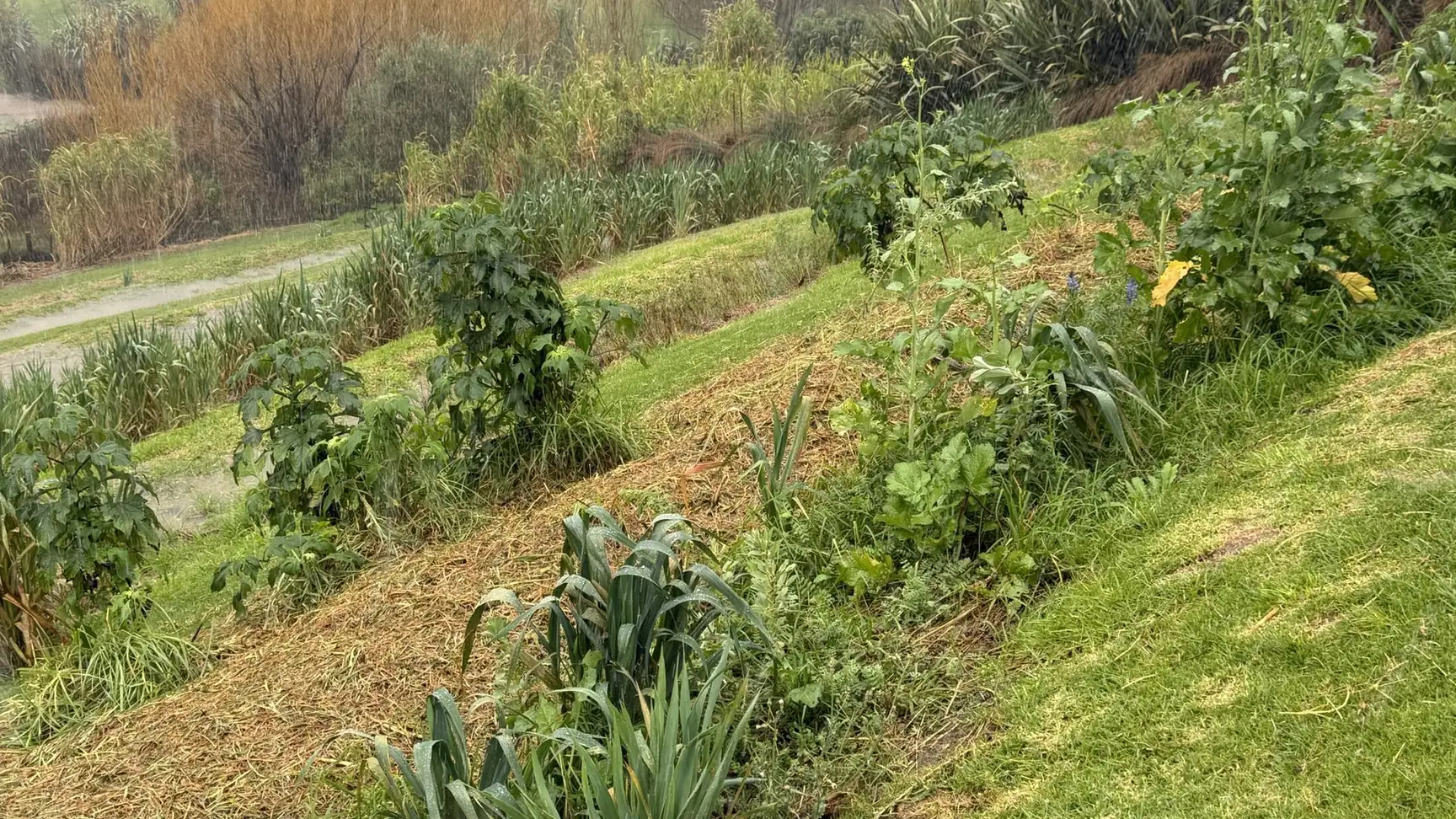
Where each one goes
- Tagasaste on top of the berm, the driest spot.
- Bana grass on the swale lip.
- Tithonia on the downhill toe, where the moisture ends up.
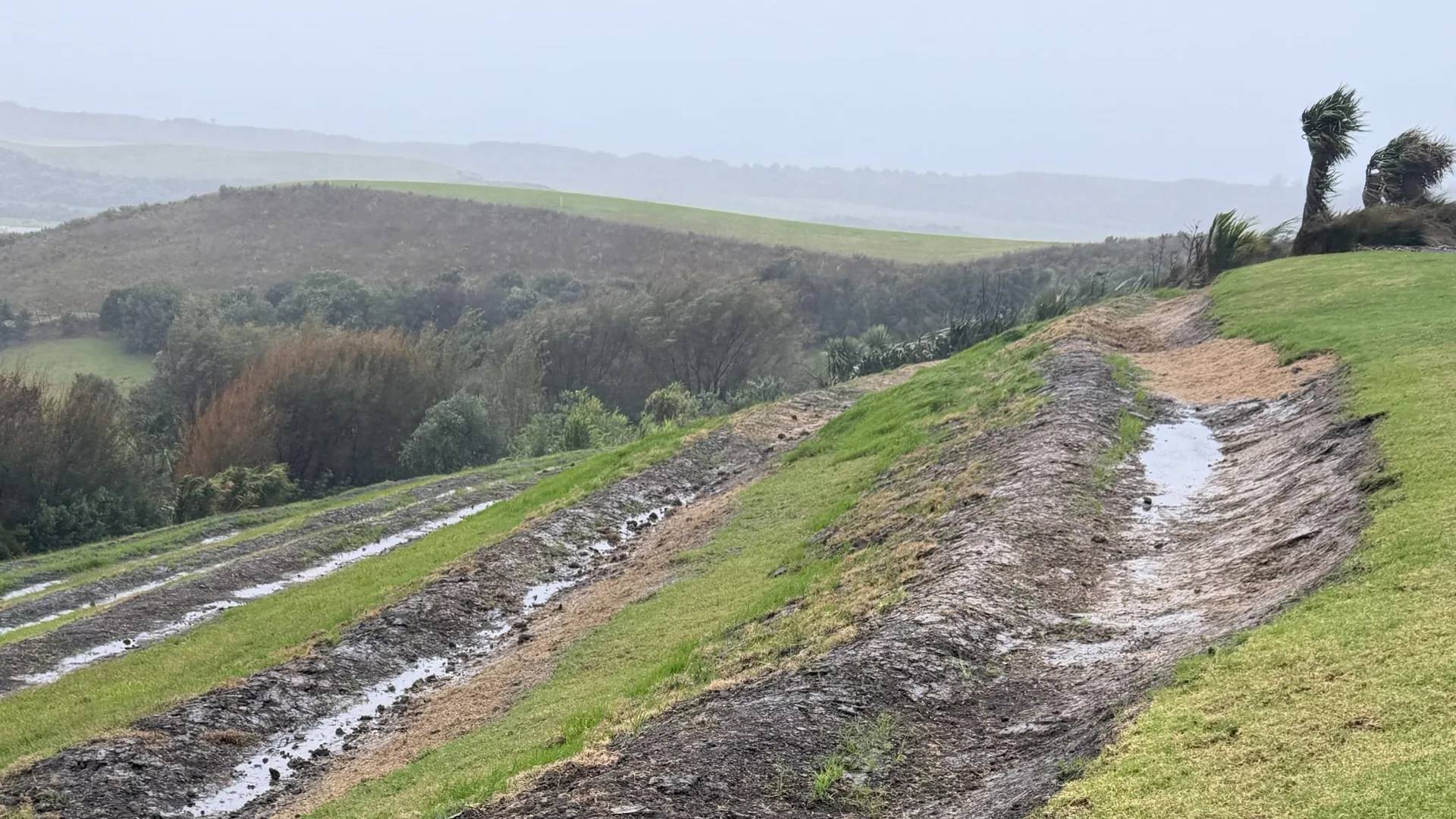
The reasons for each position are in Rebuilding soil on a clay hillside.
What tithonia and bana grass do
Tithonia is soft, fast leaf that is rich in nutrients. The green leaf carries about 3.5 percent nitrogen, 0.37 percent phosphorus, and 4.1 percent potassium by dry weight, and it breaks down quickly once it is cut and dropped.
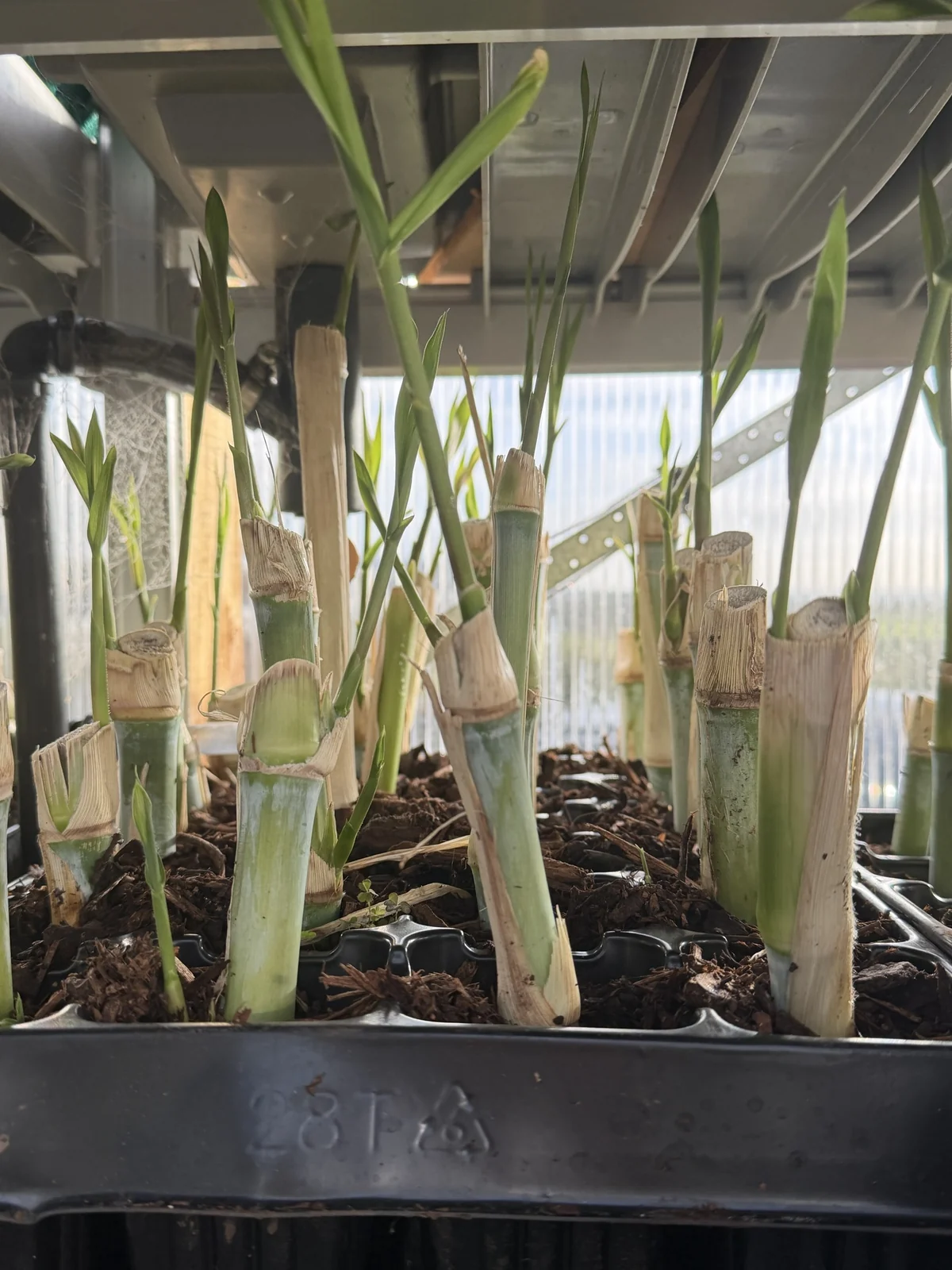
Bana grass is bulk. It grows tall and thick in the warm months, and I can cut it back again and again and lay the canes on the ground. It also gives wind shelter in its first season, long before any tree can.
Both are excellent. Both leave the same gaps.
What only the tagasaste does
It makes nitrogen. Tithonia leaf is full of nitrogen, but the plant took that nitrogen out of the soil. It moves it around. Tagasaste is a legume, so the bacteria on its roots bring in new nitrogen from the air, at about 0.16 kg per tree a year.
It is a tree. Bana grass and tithonia give me soft growth. Tagasaste gives me wood: a trunk, a permanent frame for the hedge, and firewood at the end.
It works in winter. Tithonia and bana grass are warm-season plants and slow right down when it is cold. Tagasaste is evergreen and flowers from late winter into spring. When the other two are doing the least, it is feeding bees and birds.
It keeps gaining height. Bana grass and tithonia get cut to the ground and start again. The tagasaste keeps climbing behind them, year on year.
Put the three together and something is growing, feeding the soil, or flowering in every month of the year.
Why tagasaste gets left out
I think the reason is geography.
Syntropic agroforestry was developed in Brazil by Ernst Götsch. Most of the plant lists that get passed around come from the tropics, and tithonia and bana grass both love humid heat.
Tagasaste comes from La Palma in the Canary Islands, off north-west Africa. It was brought to New Zealand and Australia in the late 1800s as stock feed. Nearly all the research on it since has been done by pastoral scientists, for farmers.
In Western Australia it is planted across poor, deep sands to carry cattle. In New Zealand the work has been on dry hill country for sheep and beef.
So the knowledge exists, and plenty of it. It sits in farming journals, and food forest growers do not read farming journals.
What the farm research is worth to a food forest
A 22-year experiment in Western Australia compared unmanaged tagasaste with ordinary annual cropping. The soil under the tagasaste held significantly more organic carbon, down to 0.9 m.
That is a pioneer tree building soil, measured over two decades.
Swap "pasture" for "fruit tree" and most of the farm findings still apply: how to raise it from seed, how hard to cut it, how close to plant it, what kills it.
Where it will not replace the others
Tagasaste is no good in ground that stays wet. It gets root rot. Tithonia is happy there.
It is also slower to give me mulch. A young tagasaste hedge cannot match a stand of bana grass for volume in the first two summers.
And in the true tropics I would expect tithonia and bana grass to leave it behind. Tagasaste is a tree from a dry island with mild winters. My guess is that Northland is close to the warm, wet edge of where it is useful. I am finding that out on my own hillside.
Eucalyptus
I am growing eucalyptus, but not on the swales. They are in another part of the property.
I grow them for their rapid growth, and because I love them as a tree. They remind me of my childhood. The type I am growing is the one we call silver dollar.
As a kid I used to climb these trees and see massive green caterpillars with all the colours of the rainbow on their backs. They made robust brown cocoons and ended up as either brown moths or butterflies. I cannot remember which. (Once I researched it, it is a moth: the gum emperor moth, an Australian species that has been in New Zealand since 1915.)
I am not trying to attract them until the trees are well matured, but I am hoping they will appear in time.
So far the trees have stood up strongly against the north-easterly winds. That is a different job from what I am doing on the swales.
If you already grow the other two
If you have tithonia and bana grass and no legume tree, those two are cycling nutrients but not adding nitrogen.
In a temperate or subtropical spot with ground that drains, add a row of tagasaste on the driest line you have. Put it uphill or upwind of what you want to protect.
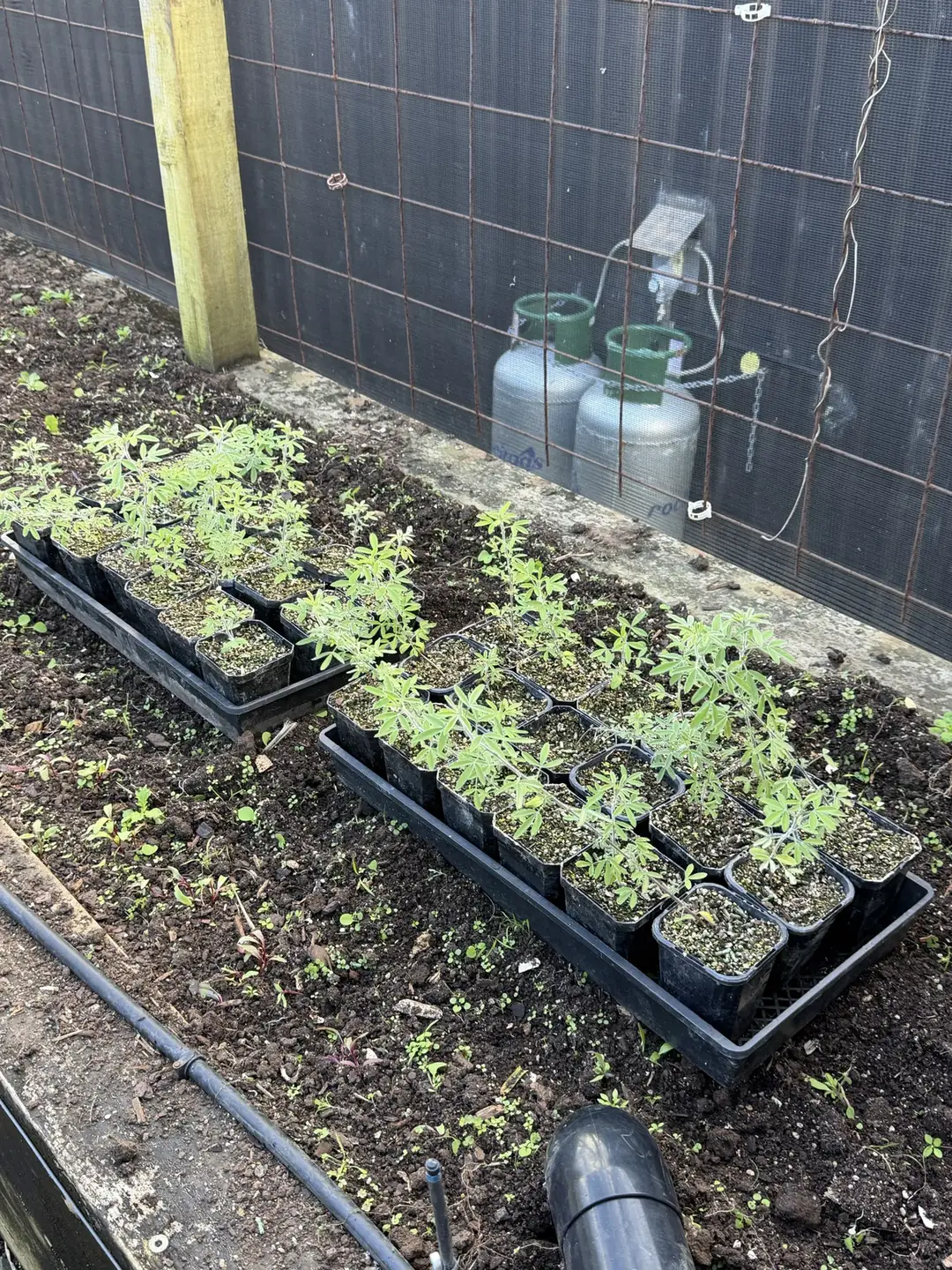
Raise it from seed. It costs almost nothing.
Mark Smith is Principal AI Counsel at Cloverbase. To discuss this article or work with me, contact me at Cloverbase.
Get each new blog post by email
One plain-text email when a new blog post is published here: a short summary and a link. We send a confirmation email first. Unsubscribe at any time.
These emails come from Meg's Cloverbase email address. We use your address only to send them. See our privacy statement.